Home Page › Forums › Spiritual Stuff › Baal worship
- This topic is empty.
-
AuthorPosts
-
August 16, 2010 at 6:44 am #205277
Anonymous
GuestI taught my youth sunday school class about The 12 Judges of Israel today. I talked a lot about Baal and worshiping of false gods and how that was the downfall of the Israelite nation. A couple of questions I posed to the class, including my daughter and son… 1. What is Baal? Is it a god or a ideology?
2. Does exist today?
3. Did the Israelite’s KNOW they were worshiping Baal at the time?
4. Do we worship Baal in our own lives today and not even know it?
I had some curious yet insightful comments from the teenagers – but I would be interested if anyone would like to comment on the topic before i go further.
August 16, 2010 at 11:07 am #234036GuestAs it applies to people in a trial of faith, is our personal Baal our own reason? Our own pride? Our own selfishness? August 16, 2010 at 1:00 pm #234037GuestMaybe Ball is any theology or doctrine that causes you to think more about the theology than God August 16, 2010 at 1:28 pm #234038GuestHad a weird online chat with someone years ago, who claimed that the spikes outside many Mormon churches were pagan obelisks linked to Egypt and/or Baal. 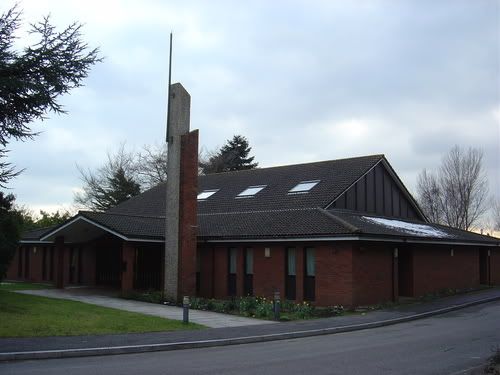
[img]http://i101.photobucket.com/albums/m49/clbruno/20224881.jpg [/img] August 16, 2010 at 8:57 pm #234039GuestSamBee wrote:Had a weird online chat with someone years ago, who claimed that the spikes outside many Mormon churches were pagan obelisks linked to Egypt and/or Baal.
So? Are they? Where did the design come from?
August 16, 2010 at 9:01 pm #234040GuestI suspect only in the most roundabout way. They’re obviously based upon western churches (Eastern Orthodox churches have tended to go in for the spire less). For obvious reasons, a high bell tower is of practical use, both in defense, visibility, and the creation of awe. (“God above all others”).
However, many early churches were built on pagan sites, so it’s just about possible that this is a pagan “lift”.
We’ve much more blatant Egyptian stuff elsewhere – Reformed anyone? BoA?
August 16, 2010 at 9:17 pm #234041GuestYeah, I agree Sam. I’m guessing MANY of our symbols and architectural styles, literature (not just mormons but all religions) can be traced back to the Egyptian/Phoenician culture. I believe the Greeks stole the linear alphabet from the Phoenicians (who were die-hard Baal worshipers) August 16, 2010 at 9:54 pm #234042GuestThere are certain elements of church architecture which are pagan in origin… most of these are not to be found in the majority of LDS buildings. * The Vesica Piscis, symbol of the feminine. Also to be found in medieval church arches.
* Astronomical/logical imagery, including the pentagram, Star of David, Sun and Moon crescent.
* Alignment and orientation.
August 17, 2010 at 6:52 pm #234043GuestI keep meaning to bring this up in SS some time, but haven’t had a good chance. I think we miss something important by not really knowing much about ancient Canaanite cultures and religions in the context of the OT. It is different enough from our current experience that I think we often fail to connect. #1 In the OT historical time frame, gods of the peoples (in their view) were often tied to military victory over one’s neighbors. It was a harsh and brutal environment of tribal warfare and precarious survival in a harsh and unforgiving landscape. It was near constant, total warfare, and the losers were slaughtered (men, women and children), their resources plundered, and a few “lucky” survivors were taken as a prize – slaves or concubines/wives.
Keep this in mind when I get to point #2. But let’s just say that the “gods” were in competition. Whatever tribe was dominating the others, yeah … their god seemed pretty cool. It might be a good idea (in a survival sense) to maybe court favor with the god that seems to be making a certain tribe win. It must be a powerful god.
#2 We either have an incorrect sense of Baal as some kind of demon/devil, and thus evil, or no preconception at all. Why would the Israelites even be tempted to change allegiance to another local deity? How could they shift their belief so radically in a short period of time?
Well … when you look at the details and mythology of Baal, it is easier to understand. Baal is the son of a Canaanite Father-God, the leader of a council of gods, named “El.” Sound familiar? Baal is the god of thunder, storms and invisible power, also of rebirth and new life. Baal dies every year and is resurrected in the spring, bringing fertility to the earth and salvation to humans. He is a fighting messiah figure, freeing his people from bondage (see #1 above).
So maybe, just maybe, it was tempting at times for the Israelites to start sacrificing to (giving power to) and seeking the favor of a god almost identical to their own, but the one that ACTUALLY SEEMS TO BE HELPING a powerful neighbor tribe. Their god (Baal) must be the “real” god, since they are winning and conquering, and are “powerful.”
August 17, 2010 at 9:30 pm #234044GuestBaal is a fascinating topic. Brian knows more than I do about ancient religions. Many of the ancient gods have similar traits to our Christian God, and to each other. You probably heard some Zeus-like qualities in that description of Baal. Another common trait is worshiping in sacred groves – which we don’t automatically associate with the Sacred Grove, but there’s no reason not to consider that parallel. I visited Tunisia a couple years ago (aka Carthage). Those of you who know history will remember that Hannibal (aka Hani-baal or “Baal is my Lord”) invaded Italy during the Punic Wars with an army riding on elephants (he crossed the Straights of Gibraltar and went through Spain and across Europe to Italy). It was in turn sacked by Rome around 200 B.C., and its history was mostly obliterated. However, when I was there, I got to walk through the Tophet cemetary of graves of children sacrificed to Baal; the cemetery dates to 400-200BC. There are up to 20K urns of children buried there. In later years, residents began to object to sacrificing their children and instead sacrificed family pets (those graves were also there). The Canaanites (ancestors to the Carthaginians) were also said to burn their children in sacrifice to their gods to ask for protection in war or from drought or other weather conditions. Some cautionary tales in Baal-worship from my perspective would be:
–
tribalism(as Brian mentions). Believing that we are righteous just because things are going our way. Or conversely, devaluing those who are outside of our own group. –
sign-seeking(which the ancient Israelites were equally guilty of, sorry to say, and we’re not much better today). Regarding things like weather as evidence of our standing with God without considering their natural causes. –
magical thinking. Believing that we need to perform “magic” rather than use common sense and preparation to overcome life’s difficulties. I think the best Mormon parallel is that while we should pray, we are also encouraged to do a heckuva lot more in addition (e.g. food storage, be careful in considering whom to marry, finish your education, etc.) -
AuthorPosts
- You must be logged in to reply to this topic.