Home Page › Forums › History and Doctrine Discussions › Temple clothing question
- This topic is empty.
-
AuthorPosts
-
September 2, 2015 at 4:08 am #210151
Anonymous
GuestHi, I am brand new here. If my question is not appropriate, I apologize, and assume the moderators will delete it. I will preface my question by saying that my husband disaffected from the church 3.5 years ago and is now an atheist. I have been the sole source of anything spiritual for my teenagers. Last February I went to the temple and experienced a major come apart when I was asked to veil my face. That had never happened before. I have not been the same since. I’m not sure what brought this incident about, but it “broke my shelf.”
I am now terrified to go back to the temple. I am struggling with all things temple related, such as wearing the garment. Some days it feels like a panic attack when I even open the drawer to get a pair out. I am a lifelong member from Pioneer stock. I have grown up with garments in my parents laundry, and watching my mother pack her temple bag with her temple cloths. I worked so hard to get to the temple, and I have faithfully worn the garment for 20 years. Yet here I am totally freaked out about the temple and the garment.
My question is this: Has anyone experienced anything like this when attending the temple, and does anyone know why women must cover their face?
Thanks for any help you can give to a sister on the edge.
September 2, 2015 at 9:25 am #303739GuestCathy wrote:My question is this: Has anyone experienced anything like this when attending the temple…
Hi, Cathy:wave: I’m glad you’re here. And, yes, I experienced a very sudden falling out with the temple.I just now searched the site with “veiling face” and got several threads on the subject. I’m just assuming it will change, but what interests me is why it never bothered me before. Why did the differences in the initiatory not bother me, or the endowment or the sealing not bother me? And now they irk me so much that I have trouble attending. Remembering my old self helps (only a little bit) me be patient, but part of me wants to just not veil and see what happens. Kidding…I think.
September 2, 2015 at 12:54 pm #303740GuestCathy wrote:My question is this: Has anyone experienced anything like this when attending the temple, and does anyone know why women must cover their face?
I think originally it may have been an extreme interpretation of 1 Corinthians 11:13.
Quote:Judge in yourselves: is it comely that a woman pray unto God uncovered?
I believe the intent was to restore prayer
exactly as it should beso they likely parsed every scripture reference to prayer that they could find in an attempt to formalize what constitutes a true prayer. I think someone remembered this scripture when they were meditating on the matter. 
The reason that I’ve always heard related to Exodus 34:29-25
Quote:And it came to pass, when Moses came down from mount Sinai with the two tables of testimony in Moses’ hand, when he came down from the mount, that Moses wist not that the skin of his face shone while he talked with him. And when Aaron and all the children of Israel saw Moses, behold, the skin of his face shone; and they were afraid to come nigh him. And Moses called unto them; and Aaron and all the rulers of the congregation returned unto him: and Moses talked with them. And afterward all the children of Israel came nigh: and he gave them in commandment all that the Lord had spoken with him in mount Sinai. And till Moses had done speaking with them, he put a veil on his face. But when Moses went in before the Lord to speak with him, he took the veil off, until he came out. And he came out, and spake unto the children of Israel that which he was commanded. And the children of Israel saw the face of Moses, that the skin of Moses’ face shone: and Moses put the veil upon his face again, until he went in to speak with him.
The short version: a woman’s countenance is too sacred to gaze upon so a veil is used. That’s what I’ve always heard.
There’s also a less than charitable theory. Doctrine and Covenants 84:22-23
Quote:For without this (the priesthood) no man can see the face of God, even the Father, and live. Now this Moses plainly taught to the children of Israel in the wilderness, and sought diligently to sanctify his people that they might behold the face of God;
Some say that men have the priesthood to shield them while in the presence of god, the sisters require the veil for protection. Now would be a good time to remind everyone that these are all theories.

A reason isn’t given, I suspect that these days it’s just a thing we do out of tradition.
September 2, 2015 at 2:54 pm #303741GuestWelcome Cathy. It’s a perfect question for this site. So, couple of thoughts regarding the use of the veil in the temple.
First, regarding
why-the-veil. At this point, it’s tough to say. Do a search on why women wear burqas and you’ll see a lot of the same kind of grasping at reasons. But the fact is it is simply a long-standing tradition, for which people will fill in their own reasons. I will say that my own interpretation of it comes from the same chapter that nibbler referenced in 1 Corinthians 11:13. In versus 2-16, Paul encourages the church in Corinth to adhere to the customs. He seems to apply meaning to the custom, just as we might today to our temple custom, but like the burqa, he’s trying to justify tradition. Parenthetically, Paul is not the anti-woman figure that we often think of, because some of “his” statements that are most egregious are probably not authentic Pauline statements, but this one does appear to be. In fact, this very section is used to defend Paul on his position with women, because he talks here about women praying and prophesying. Later in 1 Corinthians we are told that women should be quiet in Church, and that’s one of those statements that scholars believe Paul didn’t write, in part because it contradicts this passage.
Anyway, on the topic of men uncovering their heads and women covering them… just remember… custom of his day… But in this section we are told that:
Quote:Any man who prays or prophesies with something on his head disgraces his head, but any woman who prays or prophesies with her head unveiled disgraces her head—it is one and the same thing as having her head shaved. –1 Corinthians 11:4-5 (NRSV)
And then, later, a sort of justification:
Quote:Does not nature itself teach you that if a man wears long hair, it is degrading to him, but if a woman has long hair, it is her glory? For her hair is given to her for a covering. –1 Corinthians 11:14-15 (NRSV)
In other words, a woman’s long hair is both beautiful and reserved at the same time, and to Paul, the veil is an extension of that concept.
Again, it’s important to note that in this section Paul uses the word “tradition” in verse 2 and “custom” in verse 16.
Now on the more important matter of
why-in-the-temple. When I was a fully-believing member, I thought of every word, every action, every article of clothing in the temple to be full of meaning. Now, I look at it a little differently… maybe a lot differently. The temple clothing is nothing more than “robes” that we wear associated with the rite. Any ritual has elements that are the same each time, from what we wear to what we say. There is symbolism in donning the robes or in what configuration they are worn, but beyond that, there is no specific meaning of value in either the woman’s veil or the man’s hat (IMO). They are just part of the ensemble. Similarly, the endowment ritual is not about the minutia of each action, but about the overall meaning (IMO). In the temple members experience the creation of a world of beautiful possibilities, but the world turns out to be not as nice of a place as it could have been. Fortunately, God provides a way to overcome. Those in the ritual are called out of the world to accept God and the Savior, are given protection, make commitments to follow God, are given power, make more commitments, are given more power, at each step reaching closer to godliness until they are finally able to demonstrate that they have lived up to their commitments (they do this at the veil) and then are welcomed into the presence of God. It’s actually a beautiful overall concept, though too much focus on the details obscures it.
I haven’t been to the temple in so long that I think I’ve missed two rounds of changes. If it were up to me, there are some things I’d change in the temple and this falls into one of those things I’d change. So, no judgment from me if it isn’t comfortable to you, but I must also say that I think I could enjoy it more now with my new perspective on it. My advice is that if you want to try again, think more abstractly about it.
September 2, 2015 at 3:33 pm #303742GuestCathy, welcome to the site. This is a safe place, and the perfect forum for sharing the things you’re dealing with. You’ll find that everybody here has their own set of questions, doubts, and beliefs. And everybody is given the same respect that they show others, regardless of their personal beliefs. My personal journey started with question about the temple, as well. I won’t go into detail, but I’ve never found a lot of comfort there. And I remember, the first time the veiling bothered me was when I was going through the temple when my wife (fiance at the time) was getting her endowments out. During that session, I was full of questions about why the men and women had to be separated, instead of being able to stand next to each other, and why did the women have to veil their faces, and why were women told to submit to their husbands as they submit to God but men weren’t told to submit to their wives. My questions went into high gear. But, that’s only my personal experience.
I’ve heard many different reasons for the veil. None of them really satisfy me, but really, it’s about finding an answer that works for you. I’ve read a book called Sacred Symbols by Alonzo Gaskill, which talks a lot about the symbolism of the temple clothing and rituals. To me, it was interesting, but very basic. Personally, I think the most important thing you can do is to acknowledge that it’s okay to ask questions, and to find the answers that work for
you. This is a great place to start your journey, while you look for answers that work for you, and you’re surrounded by supportive people who understand what you’re going through. Welcome! September 2, 2015 at 5:27 pm #303743GuestCathy, thanks for joining the forum and posting your thoughts. It is good to have you here. I have found many things that I never thought about in the church…I just did them and they never raised a question to me. But when you stop and think about many things, it really makes you start to search for what you truly believe in, and why the church instituted some things, and how God works with us.
While you have found things in the temple you need to search for greater understanding and meaning, try to keep yourself balanced with reading conference talks and reflecting on the things you do find uplifting about the temple experience or church (if you have any).
In short, go slow. Take one thing at a time like an onion, peeling back layers while having faith it isn’t all a rotten apple.
The temple seems to be so holy and sacred…it can be hard to find some things openly discussed. But that doesn’t mean you can’t learn on your own, with a sincere heart…you want to understand why as a woman you veil your face and men don’t have to. As others have mentioned, there are traditions and practices that these are linked to in history. That may or may not appeal to you when you find the answers, but in the end…it doesn’t need to eclipse all goodness found in the temple or church. And God doesn’t upbraid sincere seekers of truth.
Several years ago I started reading about the origins and histories of temples, and the changes that have been made. It was very eye opening to me.
You may find that putting on garments causes you anguish and that is not holy, and so you may need a break to not subject yourself to that, while you seek to feel comfortable with them again.
Or, you may choose to have faith that continuing to wear them is right for you to keep showing you are trying to keep covenants, even if there is a constant reminder of things that bother you about it, motivating you to work it out, but working it out with faith.
You need to choose what you think is best for you and your peace and happiness. God will understand what you are going through. Just be sincere and seek after truth. He doesn’t care about your garments more than he cares about your heart.
September 2, 2015 at 11:37 pm #303744GuestThe question is fine here, especially since we never covenant not to talk about it. I would love to see that part change, because I absolutely don’t see it as eternal and commanded by God –
but I also know that women do NOT have their faces veiled when they are admitted into the presence of God.Think about that for a moment. That alone shows how cultural traditions can contradict each other, even in such close proximity in the temple. I am not a woman, so it doesn’t bother me in the exact same way as it does some women. There are some elements that bother my wife, who loves the temple and is quite orthodox overall – but that is not one of them. There is nothing wrong with it bothering you. The central question, imo, is whether there is enough good in the temple, from your perspective, that you can focus on it and accept the veiling for now as a cultural remnant that you hope changes some day.
If there is, you can attend again – and perhaps even find peace and comfort there; if there isn’t, you might not attend again. The resolution is yours to make and own, subject to change as you change.
September 3, 2015 at 10:02 am #303745GuestI’m trying to figure out why this is such a hot button issue for me. I understand that veils and veiling have been around forever. Is veiling in our temples coming out of the mists of the time with no definitive significance, or is it a better bet that the veil was intended by Joseph/Brigham to communicate something – not good – about women? It’s causing problems. What would be lost in letting it go?
Sometimes I wish I was still that person who would sit behind her veil and almost enjoy the extra privacy, but I’m not. A lot of us aren’t anymore.
Cathy wrote:Last February I went to the temple and experienced a
major come apartwhen I was asked to veil my face. That had never happened before. I have not been the same since. I’m not sure what brought this incident about, but it “broke my shelf.” I lived for awhile in a place where they called this a
go-to-pieces– loved that. This site is a good place to start putting it all back together. Instead of being afraid that my faith isn’t going to be restored to its original condition, I’m learning to enjoy the remodel. September 3, 2015 at 6:28 pm #303746GuestI think the veiled face relates to traditional western marriage in which the woman was veiled until the vows. 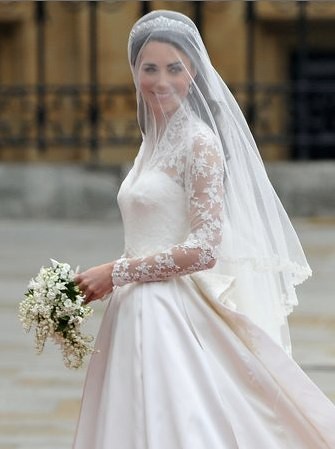
[img]http://static.flickr.com/5190/5683230518_3d501aa637_b.jpg [/img] September 3, 2015 at 7:27 pm #303747GuestCathy – can you clarify if this was your first time to go to the temple or just the first time it bothered you? My first time through the whole thing bothered me. I got through it with familiarity, but I’ve never really gotten past the sexist aspects that bother me. I feel like a traitor to my sex going. I don’t have panic over it, just simmering resentment. The veil makes me feel like I’m hiding in my parents’ drapes. The fabric doesn’t breathe, and it’s very difficult to sit there through the entire prayer while not really being able to breathe. I tend to think it’s a misunderstanding or a sexist throwback, despite the positive interpretation of a woman’s face being too sacred. Whatever. I truly hope that there are further changes that improve the ceremony to make it less sexist. There have already been some changes in my lifetime that are along these types of improvements, but fundamentally not much has improved toward women.
September 3, 2015 at 10:48 pm #303749GuestThis was not my first time in the temple. I was endowed post 1990, but before the newest change in the initiatory. I was married civilly and endowed and sealed one year later. My husband and I were asked to help with every temple wedding in our ward that year as a kind of penance. We literally worked so hard to get to the temple. The first time I went I honestly thought I was participating in a different religion. Nothing had prepared me for the ritualistic nature of the ceremonies. Heck, I didn’t even know I had to sit apart from my husband until I walked in the room. I remember wanting to bolt out the door, but stayed put because I kept thinking that there must be something valuable that my family knew about the temple that I just didn’t understand. I have kept going but I just don’t get it. I love the concept of eternal marriage, so my participation at the temple is purely service oriented. I am providing this service to dead people so that their marriage can be forever too.
I can’t seem to figure out where any knowledge or power claims come from. I figured I must be doing something wrong since I don’t feel any smarter or more at peace.
On the day I fell apart, I had finally understood my husband’s disaffection. (Not just feeling pity, I deep down understood why he felt he had to leave the church). We had a fabulous connection where I was able to truly give away my thoughts of a traditional Mormon future, and be okay to love him, and to even respect him. On that day I told my husband I was finally ready for him to remove his garment. I had previously asked him not to. He had worn it against his wishes just to help me be okay with the other changes he was going through.
I took him to a nice store to purchase “gentile” boxers. He asked if I was buying some too. I had not thought of ever removing the garment, but in an act of solidarity, I purchased a set of undergarments for myself. I thought I would wear them for the weekend to show him that I cared. Well, I was expecting to feel awful and guilty, but I didn’t. It actually felt fabulous. Man, fabrics have come a long way in 20 years. I was so shocked at my reaction that I got very scared that I was “on the slippery slope” to apostasy too. So what do good Mormon ladies do, we go to the temple.
That is where my original post was coming from. I went to the temple to seek an answer about the garment (I had been reading about its origins) and as the ceremony went on, I saw for the first time how the language was not as equal for both men and women. I sat in my seat thinking of my daughters and how I was going to explain any of the temple ceremonies to them (they are modern women with feminist viewpoints). When I realized that I could not explain any of it to them satisfactorily, my anxiety went through the roof. Unfortunately that was just the time in the ceremony to veil my face. My brain exploded! I sat looking through my stuffy veil and felt like I was surrounded by cult members. The praying sounded like chanting and if I had not been seated against the wall I think I would have run from the room.
I am now trying to figure out what happened to me. The devout Mormon woman in me wonders if I was very, very wrong to remove my garment and this happened because of my error. The ME that has lived with a disaffected atheist says that it is all in my head. The ME that is struggling with things she has learned over the past 3 years wonders if she really is a member of a cult.
I’m kind of messed up right now.
September 4, 2015 at 12:47 am #303750GuestI hear ya, Cathy. This was my attempt to say more or less the same thing: http://bycommonconsent.com/2015/02/25/temple-prep-for-daughters-brace-yourself/ Of course, the church just put out 3 new movies that haven’t changed any of these sexist problems, and they only do new movies every 15 years or so. I don’t expect helpful changes on this front any time soon. I’ll just sit in solidarity with you because that’s the best I’ve got.
September 4, 2015 at 3:49 pm #303748GuestCathy wrote:I can’t seem to figure out where any knowledge or power claims come from. I figured I must be doing something wrong since I don’t feel any smarter or more at peace.
LDS theology is that we “learn” in the temple and are endowed “with power”. To me, these are misguided concepts. We don’t gain anything by external experiences. To me, any church, LDS or otherwise, and any ritual in said church, is about allowing the participant to get closer to God within themselves. Or as was said in Chariots of Fire (1981): “Where does the power come from to see the race to its end? From within.” This is why for some, religion works to enhance inner peace/strength. So, whether you go back to the temple or just attend a church service, my advice is not to let it be something that happens to you, but something in which you are the main actor… let it be nothing more than a framework for your personal experience.Here’s the great clip from CofF (where Eric Liddell, a devout man and Olympic athlete, talks about the power within):
September 5, 2015 at 12:53 am #303751Guest“ Quote:Something in which you are the main actor”
Well, that is the purpose of a participatory play, which the endowment is intended to be.
I like to remember that, in the end, everyone is admitted into the prescence of the Lord, regardless of the fact that they only can give incomplete, token obedience. Seriously, to me the central message of the endowment (the power of it) is the understanding that we can’t do what we covenant to do – but we enter the presence of the Lord anyway, because of the promise of a Savior before we even came to the Earth. That idea is incredibly powerful.
I don’t have to take the need to perform the ordinance literally, and I certainly don’t have to take any aspect of the ordinance literally. I can focus on what I see as the central symbolism of my role in the play and take heart that I always enter into the presence of the Lord – no matter what happened in my life that day.
September 25, 2015 at 6:30 pm #303752GuestCathy, I could have written the exact same words that you used. The temple didn’t bother me for years, and then one day as I pulled that stifling polyester veil over my face, it all fell apart.
I’ve gone back and forth with myself as to what the veil
symbolizes. Does it represent shame and unworthiness, and if so, why am I allowed to enter the temple at all? Does it represent a hymen, as in western Christian wedding tradition, and if so why do I have to wear one even though God knows I’m not a virgin? Finally I decided that it doesn’t matter what the veil represents– it matters what it actually does. The veil literallymakes women faceless. During the “true order of prayer” women become invisible and interchangeable. And with what our unofficial, folk doctrine has to say about Heavenly Mother(s) and polygamy, that is exactly what a woman has to look forward to in the Celestial Kingdom. Being one of a dozen or a thousand or a billion sister wives, birthing spirit children but being “too sacred” to be acknowledged by those children. I haven’t been able to convince my husband the difference in the covenants we make in the temple positions a woman as being subject to her husband. I can’t get him to understand that I will never feel like we are “equal partners” if he is
presidingand I am hearkening. But the veil is an undeniable, physical process that allwomen and nomen must experience in the temple. For all that we talk about men and women being equal in the sight of God, the veil directly contradicts this by literally hiding women’s faces from His sight. Short answer: I have decided not to participate in another endowment session until women are no longer required to cover their faces (or until men
are). I’m not holding my breath. -
AuthorPosts
- You must be logged in to reply to this topic.